
Sustainability & Social Impact

Sustainable straw bag manufacturing, with 10,000+ Moroccan artisans
Every piece is woven from 100% natural plant fibre — doum palm, raffia and reed — harvested in Morocco. Work is placed directly with rural cooperatives, with no intermediary between the maker and the order.
Plant fibre, harvested in Morocco
Doum palm, raffia and reed. Renewable, biodegradable, and cut on a cycle the oases have sustained for centuries.
Nothing we ship contains plastic fibre, synthetic backing or chemical dye as standard. Colour comes from pigment baths the cooperatives have used for generations, and any deviation from that is specified and priced openly rather than hidden in a finish.
Fibre is bought locally, so the distance between where a plant is cut and where it is woven is measured in kilometres rather than continents.
Three things we hold to
Natural plant materials
- Doum palm leaf and raffia, cut on a renewable cycle
- Reed and halfa grass from local oases
- No plastic fibre and no synthetic backing
- Biodegradable at end of life
Zero-waste production
- Off-cuts are rewoven into smaller pieces
- No industrial machinery in the weaving process
- Around 90% less energy than a mechanised line
- Dye baths reused across batches
Artisans, not a factory floor
- Work placed directly with rural cooperatives
- Paid per piece, above the local average
- Roughly half the network are women heads of household
- Weaving is done at home, on the maker’s own hours
From dried palm to finished handle
Harvest
Palm and reed are cut in season, then sun-dried in the open for several weeks.
Prepare
Fibre is split, softened and — where a colour is specified — dyed in small batches.
Weave
Each piece is worked by hand. A market basket takes a day; a fine braided tote takes three.
Finish
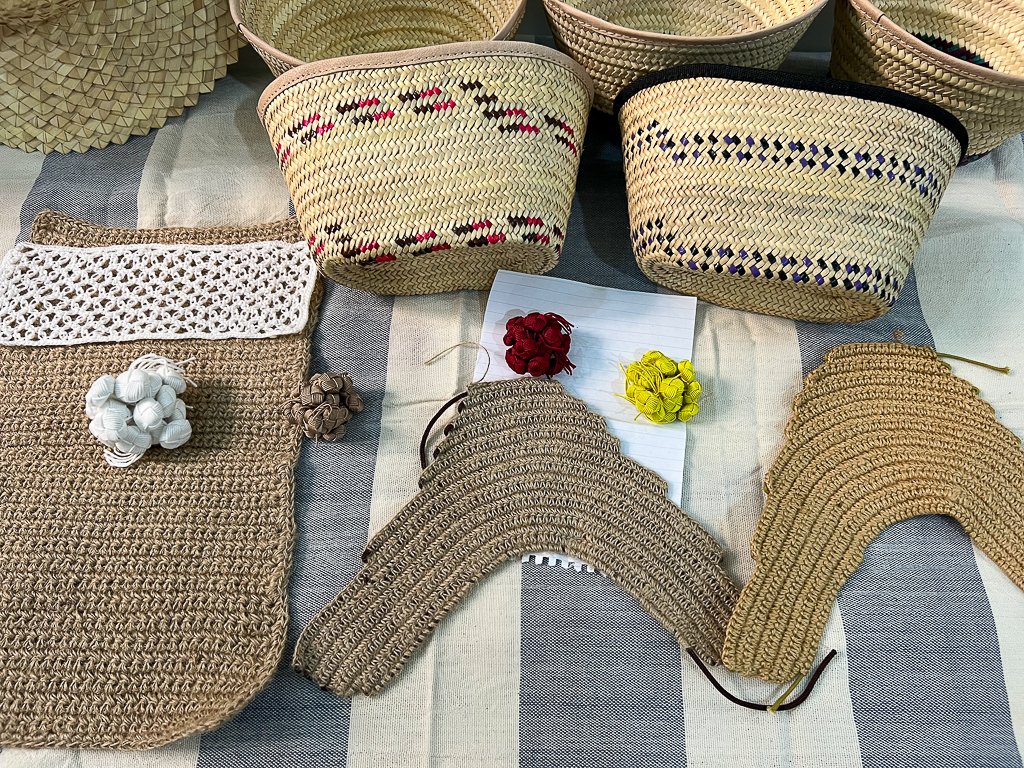
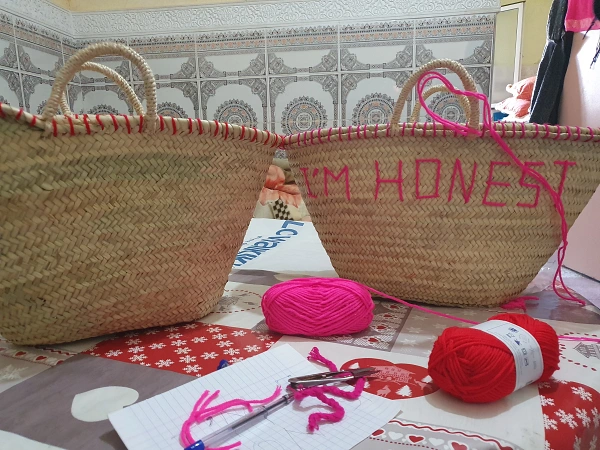
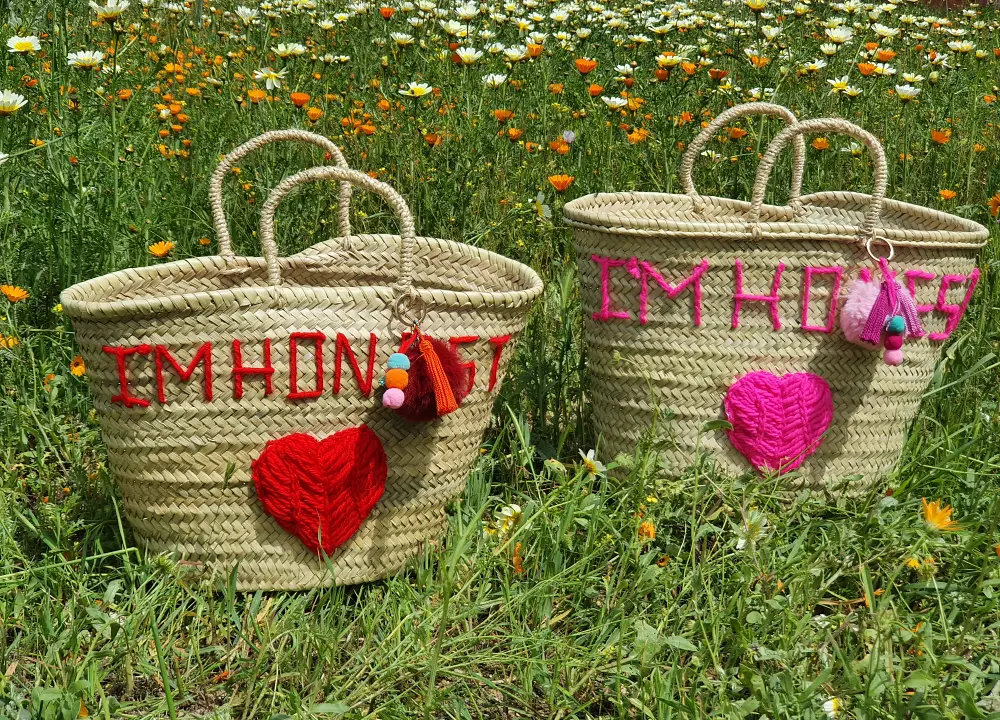
Handles, leather trim, embroidery and labelling are added, then every piece is checked against the sealed sample.
The supply chain, in numbers
We can document the origin of the fibre, the cooperative that produced a given order, and the terms it was paid under — per order, on request.
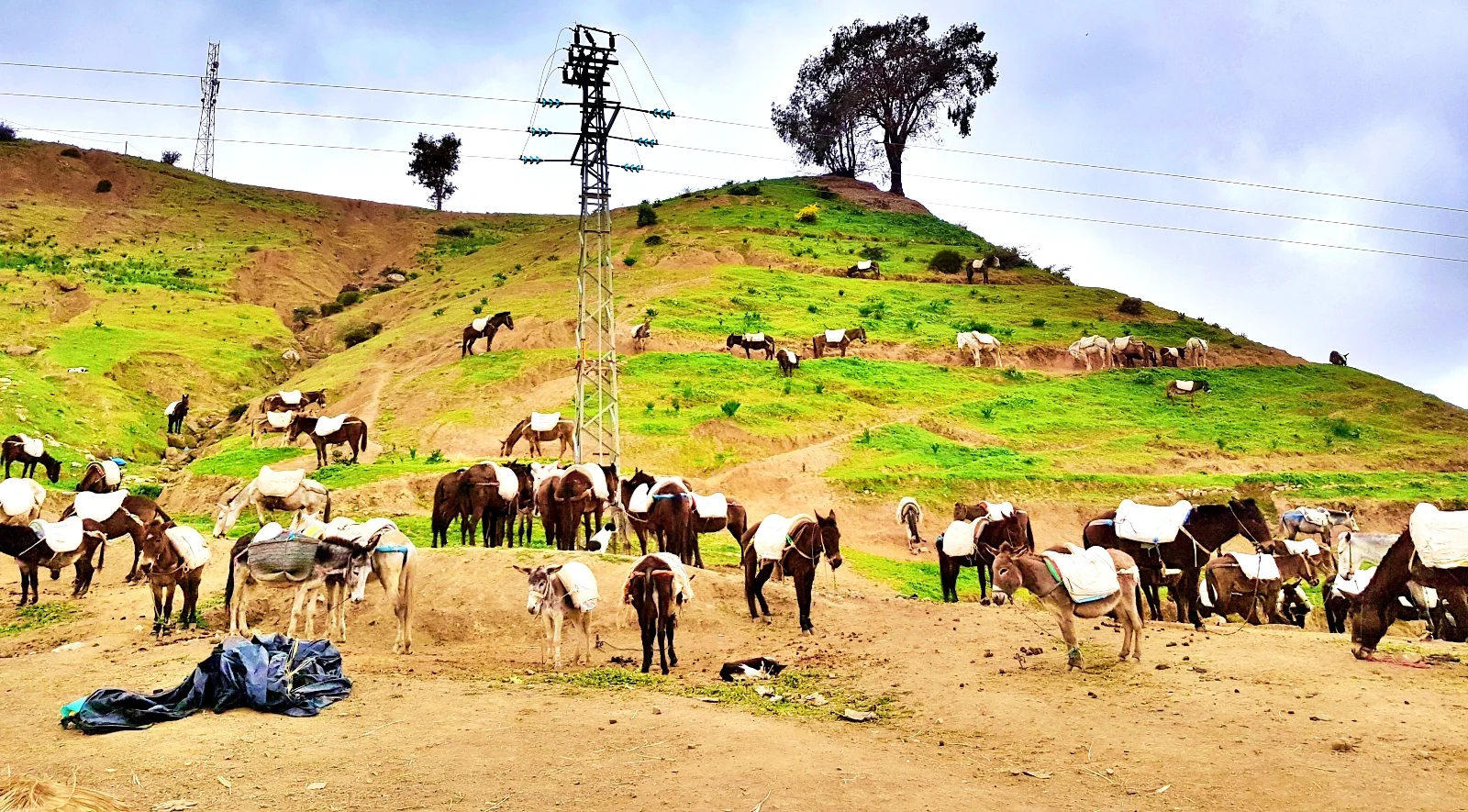
Where the fibre becomes a basket
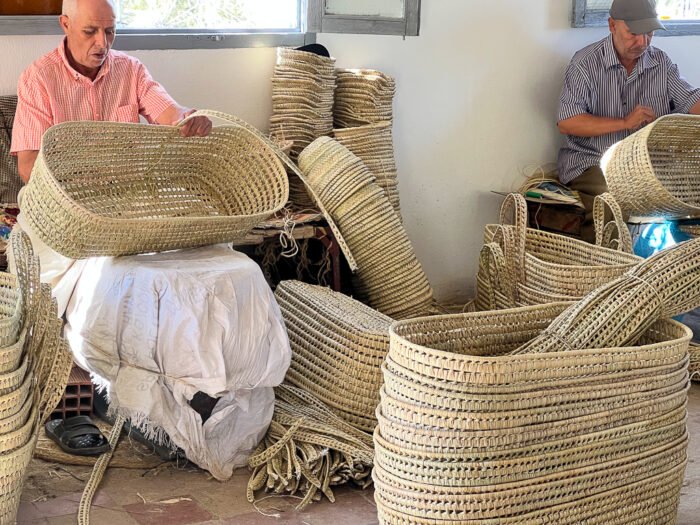
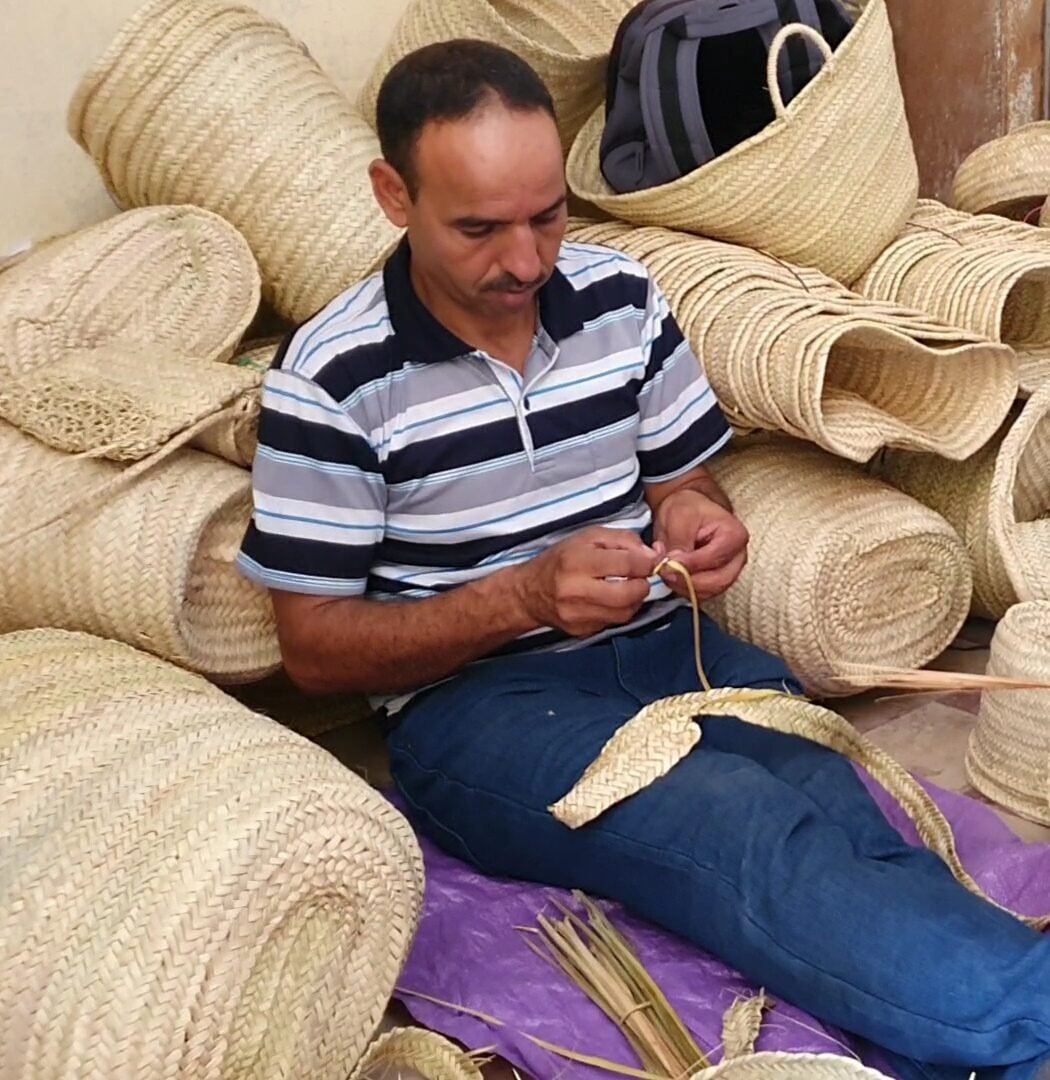
Source from a supply chain you can describe to your customer.
We can document fibre origin, the cooperative that produced your order and the terms it was paid under.